So you want to sketch outdoors…
Sketching outdoors can be a liberating way to capture your experience of a place in time but there are things to consider if you want to spend your time sketching and not wasting it looking for the best spot, your favourite eraser or just being overwhelmed with the scene in front of you! Here are my top tips to make it as relaxing and fruitful experience as possible!
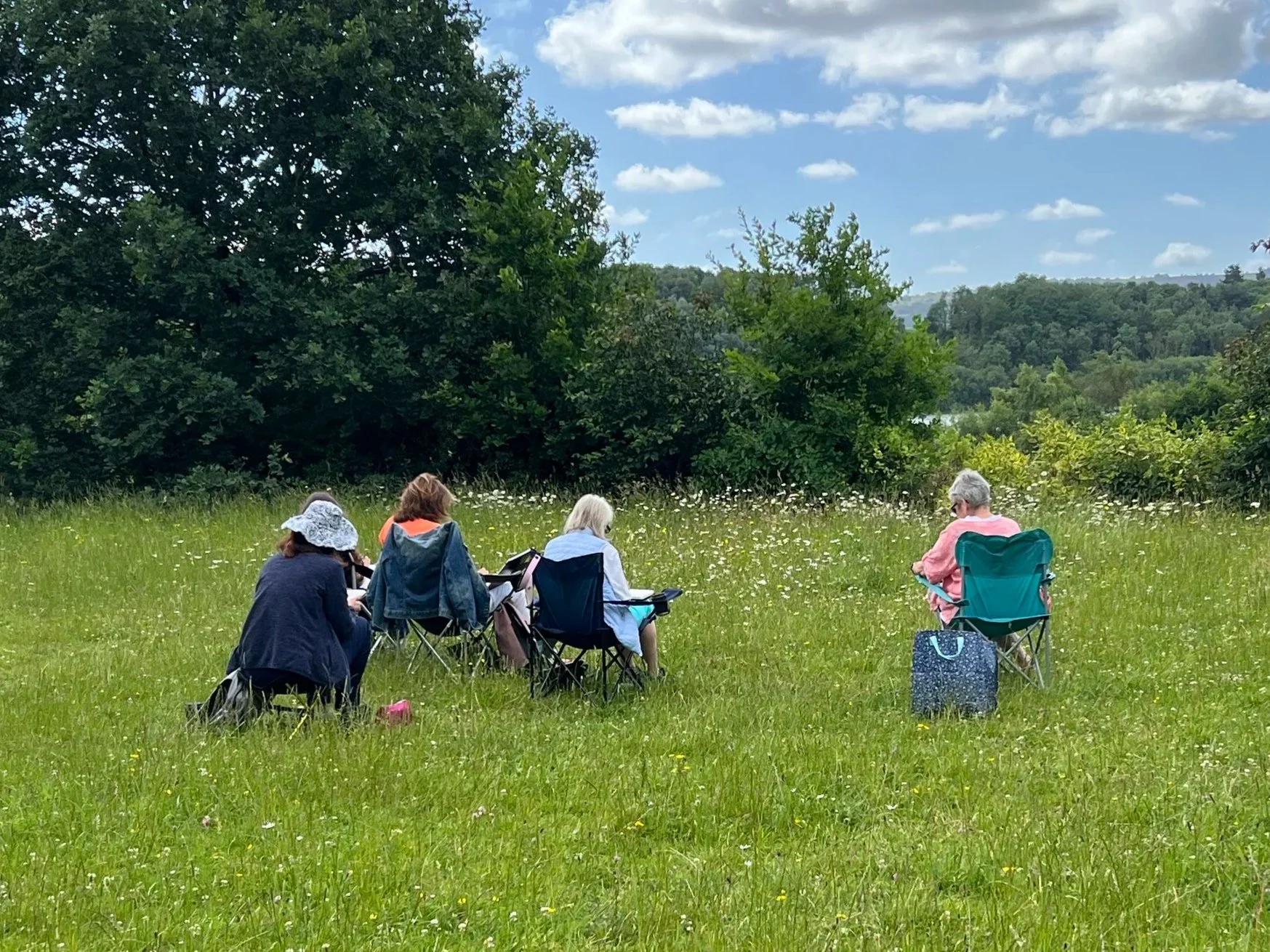
There is nothing like it!
Perched on a stool in the middle of a flower meadow on a summers day, listening to a sky lark way up high while bumble bees dart in and out of hedgerow flowers as you sit with your sketchbook poised to create a masterpiece….but what on earth shall you focus on? It is all overwhelming and it will never all fit on the tiny page of your sketchbook, and how on earth will you remember the colours? Those beautiful colours that drew you to this spot, but you only have a 2b pencil and a fine liner with you.
Or maybe you have just lugged your own bodyweight in art materials up a steep hill in order to capture the distant view below, only for the heavens to open…and you forgot your umbrella!
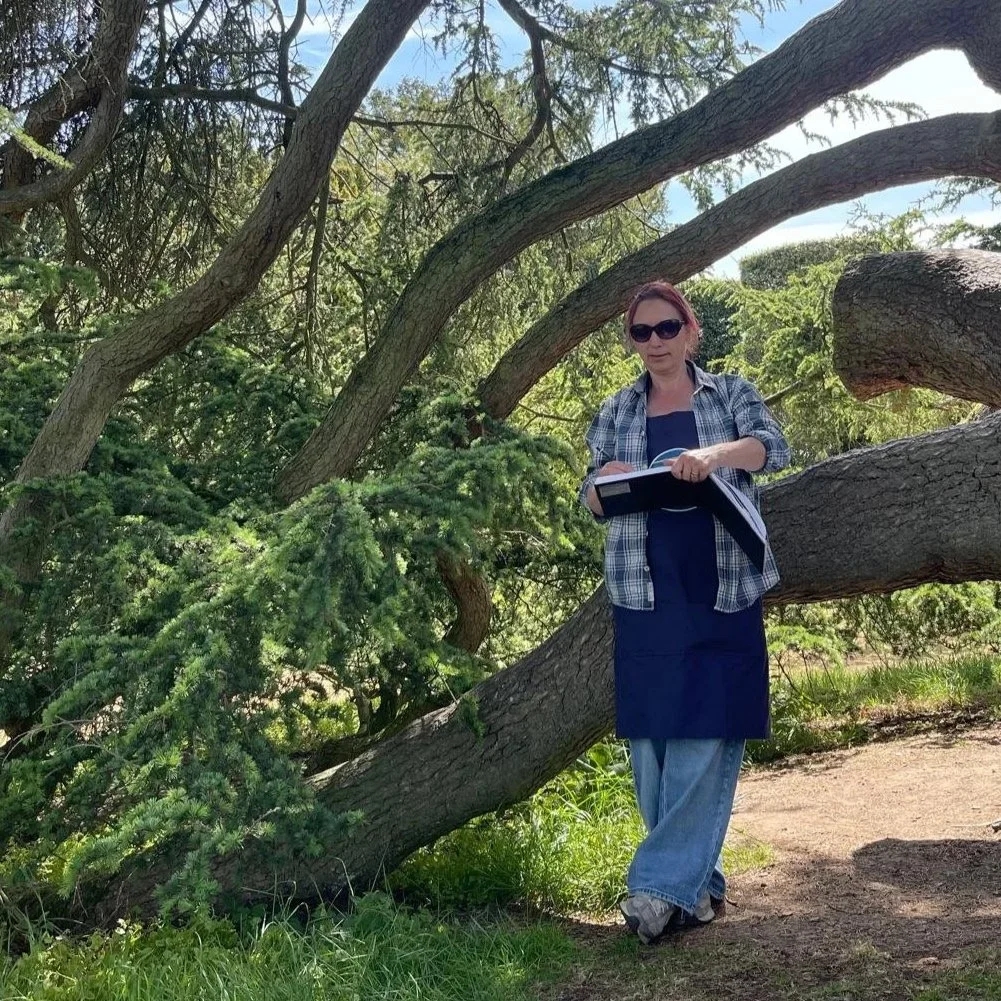
Sketching the gardens at Arley with my trusty Seawhite 30×30cm sketchbook and 4B pencil!
Here are my TOP 5 tips for making your plein air sketching (or painting) as pleasurable experience as possible.
My name is Alison Stafford and I have suffered from Raynaulds Syndrome all my life, (which means my hands go dead when I reach for the milk in the fridge) and I have a deep fear of not having that thing I want in my bag at all times. This has been known to include an obligatory emergency cheese sandwich and a selection of poo bags (the dog was very generous in this respect).
So what do you take on your first trip outside to capture the great outdoors?
Look at the weather forecast and dress/pack your bag accordingly. I always say layers are best so you can make sure you are comfortable.
Raining? If you are anticipating wet weather a shell outer layer that is waterproof is much easier to carry or pack away until you need it. Better to layer up underneath it so you stay warm!
Sunny? Make sure you pack insect repellant and sunscreen! Sunglasses will help to avoid scrunching your eyes, but be aware that they will alter the colours of the landscape if you are particularly keen to colour match insitu!
Windy? It might be best to stick to sketching rather than setting an easel up and painting as there is nothing more frustrating than mixing the perfect colour to match that sea, only for a big gust of wind to blow your easel over and your lovely colour palette to disappear into the sand…or grass, hedge, mud (you get the gist)
Cold? Wear or pack a hat and gloves! Fingerless are ok if you don’t suffer from the cold as I do. I find fingerless gloves totally useless at staving off the cold, so wear regular woollen gloves with a pair of marigold over the top. This stops the wind from penetrating the knit of the gloves and also means I can stay dry. It also means I feel like Bungle off Rainbow so I have to be kind in my critique of my sketches and just embrace the loose approach!
Less is best when it comes to kit!
A small rucksack should be sufficient to hold your equipment, which should not comprise of more than you absolutely need! In fact I find that I do my best sketches when I only have a few mark making tools at my disposal and take one or two sketchbooks.
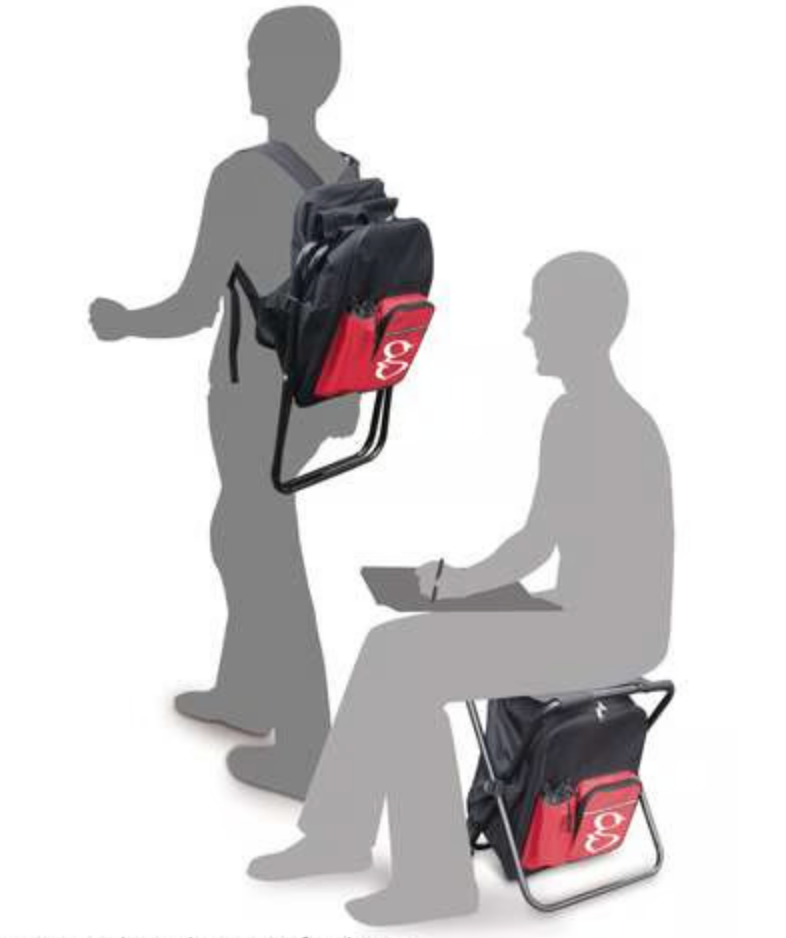
A bag you can carry on your back will keep your hands free to navigate tricky paths, or sketch while you walk!*
If you have one of the art rucksacks that include a stool then prepare to be asked where you got it from!
I have taken this on many a plein air trip and it was even big enough to take on an overnight stay as I managed to add a bag of smalls and essentials in the bottom of it!
I bought mine from Gaersteker 10 years ago and it is still the best buy I have ever made! Big enough to take on longer trips and perfect to take as much as you can carry…which leads me to the next point…
4. Don’t take more than you can comfortable carry, or quickly pack up in case of inclement weather or stampeding bulls!
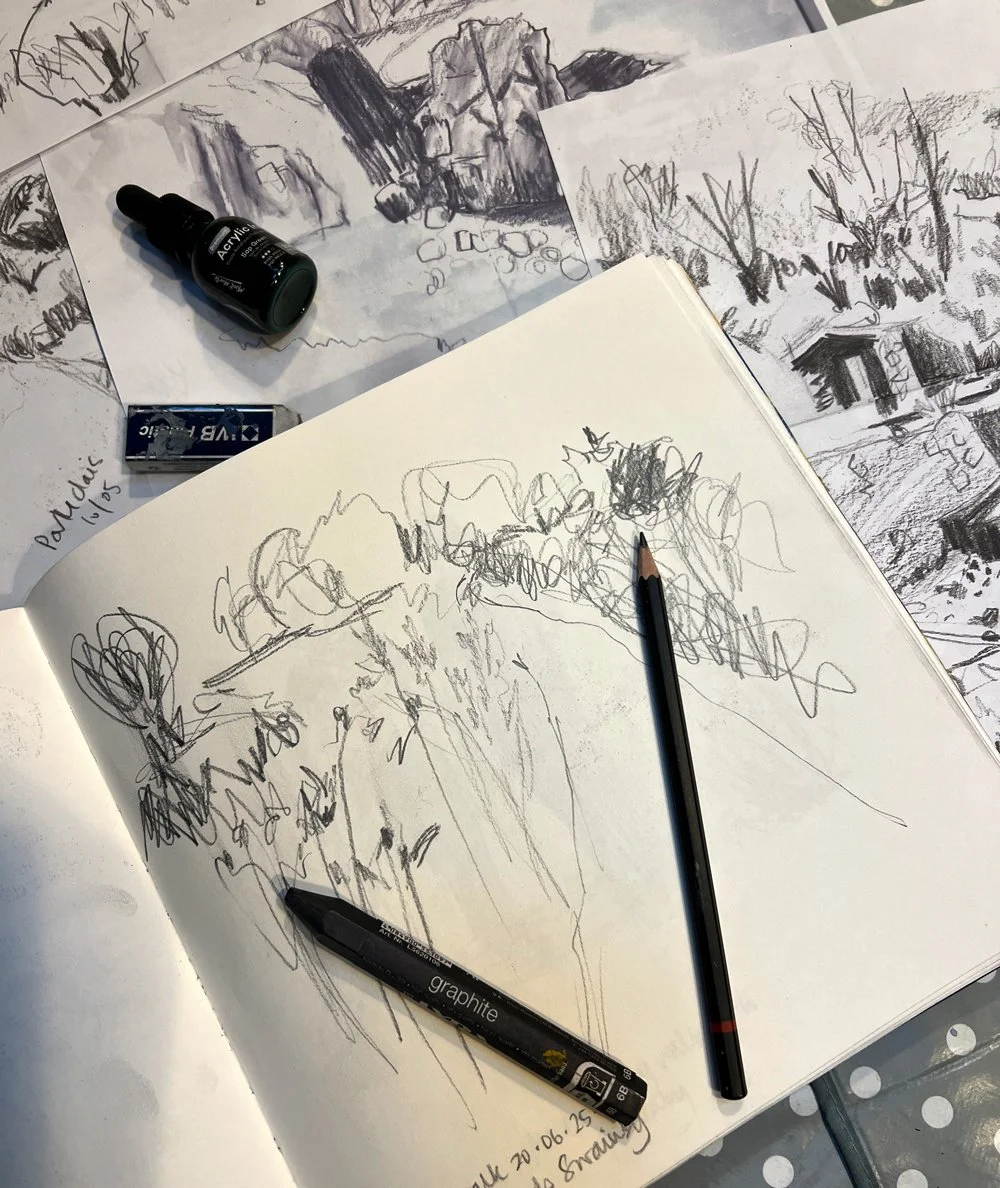
I like to make expressive sketches and some of my favourite tools are :-
Seawhite square sketchbook , (30x30cm or 20x20cm)
8B water soluble Lyra Stick (graphite)
A small Tupperware box of willow charcoal,
a small bottle of drawing ink in Burnt Sienna, Paynes Grey, Yellow Ochre and a turquoise blue. I always make sure these are in a plastic bag in case of leakage!
I also have a small pencil case with various graphite pencils, a sharpener and an eraser AND my trusty battery operated eraser! Great for breaking up large areas of graphite and highlights!
A small selection of Pan Pastels to ‘stain’ the page with colour that captures the mood, temperature or feeling of the place you re sketching**
** you can find out more about my process on one of my in person workshops
Some poo bags or just small bags if you don’t have a dog! These are always handy for taking items of rubbish home, sharpening pencils into, and throwing used kitchen roll in
Sheets of Kitchen Roll - I dispense as much as I can and just fold it up. It is great for blotting ink, drying your hands, smudging your charcoal or graphite, or using as a napkin (I’m posh!)
Small plastic water bottle (with water in) for diluting the inks or washing brushes
Small selection of brushes, a twig or cocktail stick, and anything that makes an interest mark
Masking Tape
Flask of coffee / bottle of water
Cheese sandwich (obviously insert your favoured food here)
Clear plastic bag that holds my sketchbook whilst open (only for hardcore plain air sketchers). If it rains pop your open sketchbook into the clear bag and carry on sketching! (BTW I am not hardcore and have never done this. I would much rather sketch from the comfort of my van, or nearby cafe!)
5. Sit for a while and think about what it is that drew you to this particular place?
Focus on that one thing and time yourself while you try to capture it using energetic marks. Time is always of the essence when you are sketching outside. You may find yourself exposed to a passing rain cloud, changing light, or anything that nature decides to throw your way!
Move around and get different points of view. Just standing two steps to the left or right may give you a much better view or composition.
Leave out what doesn’t benefit the overall composition. You don’t need to sketch everything you see. Make some thumbnail sketches down one side of your page before investing time in a complete study and just use artistic licence to say what you want to say about what you see.
It is a bit like having to impart a really important piece of information to someone who is walking out the door. Be succinct, and clear about what you need them to hear!
Most of all have fun - go with like minded friends and make time to compare sketches at the end!
If you would like to join me and Allie Pottinger for some outdoor sketching we are holding a Sketch Club once a month. It is an untutored event that is designed to bring sketchers together, from total beginners to seasoned artists, to gain confidence, have a go and just enjoy each others company.
You can register your interest HERE. We will meet in various places around Cheshire - we have picked each venue based on parking facilities, nearby cafe/toilets and inspirational things to sketch!
Feel free to comment with your suggestions or favourite things to take on your sketching trips!